Manufacturing safety incidents are often attributed to operator error or training gaps. When something goes wrong on the plant floor, many organizations’ first question is whether the operator followed procedures correctly.
But in many manufacturing environments, particularly high-speed converting and corrugated operations, the root causes of safety incidents often begin long before anything goes wrong.
According to industry veteran Tom West, Senior Environmental Health & Safety Coordinator at SUN Automation Group and a Certified Machinery Safety Expert (CMSE®), safety failures typically develop through a gradual breakdown in three areas: equipment stability, process design, and operational leadership.
Understanding how these factors interact is essential for preventing incidents before they occur. For plant managers and maintenance teams, it also highlights where to focus efforts to improve both equipment reliability and operator safety.
Equipment Instability Often Creates Unsafe Moments
Industrial machines are designed to operate within specific tolerances. When those tolerances drift through wear, misalignment, aging components, or inconsistent maintenance, operators are often forced to compensate.
As West explains, “The operator is only as good as the machine. And the machine is only as good as the operator.”
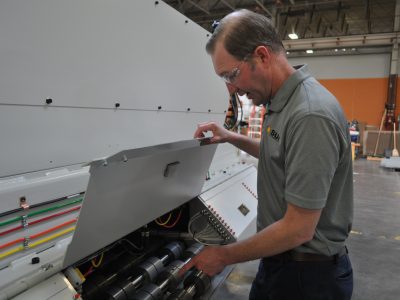
When machines become unstable, operators must intervene more frequently to clear jams, adjust components, or restore production flow. For many plants, this shows up as frequent stoppages, repeat jams, or operators needing to manually adjust equipment during production. Each intervention increases exposure to moving parts, high-speed equipment, and other potential hazards.
Beyond safety exposure, frequent stoppages and manual interventions also carry a measurable cost—lost production time, increased maintenance demands, and reduced overall equipment effectiveness.
Maintaining stable machine performance across the plant floor is one of the most effective ways to reduce those risks. Modern corrugated operations depend on equipment designed for reliability and consistency, such as advanced rotary die cutters like the SUN625 Rotary Die Cutter, used in high-speed converting environments.
Many serious safety incidents do not originate from a single catastrophic failure. Instead, they often result from what West describes as a ‘cascade of smaller problems.’
Minor issues that go unaddressed, such as worn components, inconsistent parts, or delayed maintenance, can slowly push equipment further from optimal operating conditions.
Eventually, those small problems accumulate. “We rarely see one catastrophic event,” West says. “It’s usually a series of smaller failures that build until something significant happens.”
This is why preventive and predictive maintenance programs play such a critical role in maintaining safe plant environments. When equipment is maintained according to engineering standards and when operators have access to genuine replacement parts, machines stay closer to their intended operating conditions.
That stability means fewer manual interventions and safer day-to-day operations.
Process Drift Can Introduce Risk Into Daily Operations
Even when equipment is well designed, plant processes can gradually drift away from the original engineering intent.
Over time, production teams often develop workarounds to keep lines running. While these fixes may solve immediate problems, they can unintentionally introduce new safety risks.
West notes that many plants eventually develop informal practices that fall outside manufacturer guidelines.
“Any time you hear someone say, ‘It’s not in the manual, but it’s how we do it here,’ that’s usually a warning sign.”
These undocumented procedures, sometimes referred to as institutional knowledge, may help teams solve recurring problems in the short term. But they also increase variability in how equipment is operated and maintained.
When manual intervention becomes routine rather than occasional, the underlying process may need to be re-evaluated.
If operators must constantly intervene to keep a system running, the risk is no longer a situational one. It has become structural. Maintenance teams often identify these issues through repeated service calls, quick fixes, or recurring downtime in the same machine areas.
Training Is Often Blamed but Rarely the Root Cause
Training plays an essential role in safe plant operations, but it is frequently blamed when incidents occur.
In reality, training is only effective when operators are working within stable systems.
When machines behave unpredictably, or processes drift from documented procedures, even experienced operators may be forced to improvise.
West emphasizes that most operators take their responsibilities seriously and want to work safely.
“There are really only two situations where the operator can be blamed—an unintentional deviation from training or a disciplinary issue. Most of the time, something else in the system has already broken down.”
Industry initiatives such as TAPPI SAFE, developed in part through the work of TAPPI Safety committee members like Tom West, aim to standardize safety education across the pulp, paper, and converting industries. Programs like these help ensure operators receive consistent training and understand best practices for working around industrial equipment.
However, even the best training cannot compensate for unstable machines or poorly defined processes.
Where Safety Really Starts: Leadership
Ultimately, West believes the most important factor in plant safety is leadership.
Leaders determine whether maintenance teams have the time, tools, and resources needed to keep equipment operating properly. They also shape the culture that encourages employees to report safety concerns before they escalate.
“Leadership is the first line of defense and offense when it comes to safety.”
Organizations that invest in both people and equipment tend to see the strongest safety outcomes.
At SUN Automation, internal safety initiatives have focused on building trust and encouraging open reporting. When confidential incident reporting practices were introduced, the company saw a dramatic increase in safety reporting.
Rather than indicating declining safety performance, the increase reflected something positive: employees felt comfortable raising concerns early, before they developed into larger problems.
West believes that strong safety cultures share a common trait: respect for the people operating the equipment.
“Any laborer who does good work is a craftsman. And any craftsman who does good work is an artist. If you invest in your people and your machines, safety follows.”
Safety Is the Outcome of Reliability
Manufacturing safety cannot be solved through training alone.
It requires stable equipment, disciplined processes, and leadership that prioritizes both reliability and people.
When machines operate consistently, and processes remain aligned with engineering standards, operators can focus on doing their jobs safely and effectively while also improving uptime, reducing costs, and supporting more predictable production.
In the end, the safest plants are not simply those with the most rules. They are the ones where equipment reliability, process discipline, and respect for operators work together to create predictable, stable operations.
And when those conditions exist, safety becomes not just a requirement but a natural outcome of the plant’s operations every day.
If you’re evaluating ways to improve equipment reliability, maintenance practices, or operator training in your corrugated operation, SUN Automation’s engineering, service, and training teams can help. Learn more about SUN’s service and support programs.
 SUN Automation Group Welcomes Dawn Wittkopf as West Coast Capital Equipment Sales Manager